
automation

Building AI Agents with Ollama and Tool Calling in Go

Building AI Agents with Ollama and Tool Calling in Go

Bogdan Ungureanu

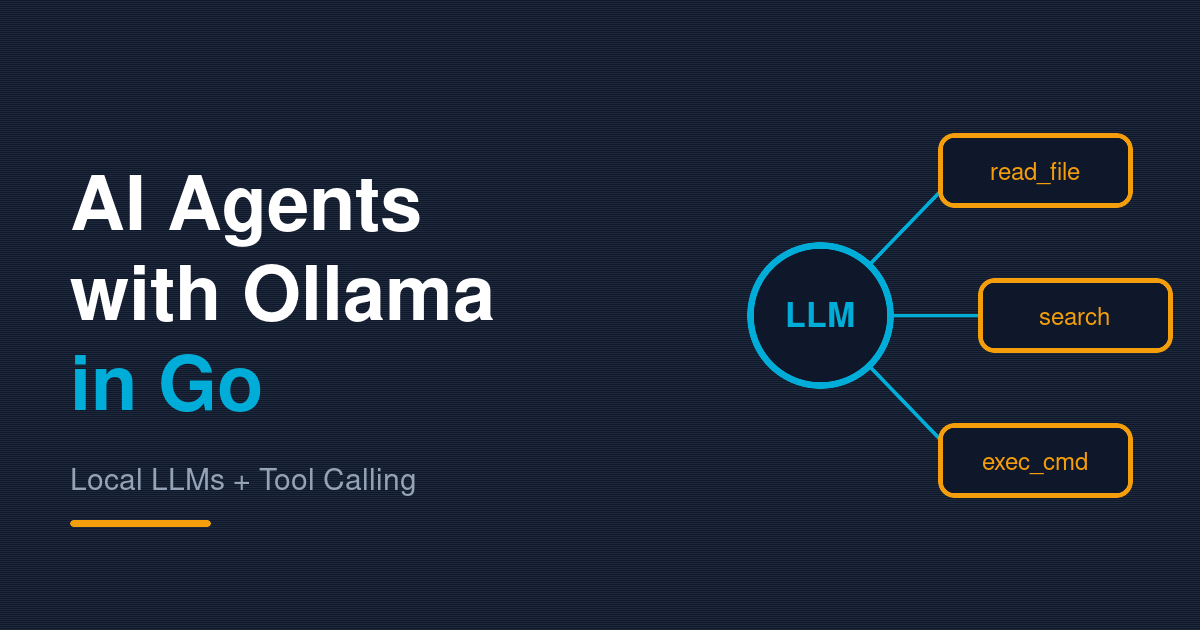
The landscape of AI development is undergoing a fundamental shift. What once required expensive API calls to cloud-based LLM providers can now run entirely on your local machine using Ollama. But raw language models alone aren’t enough to build truly useful AI systems—they need the ability to take actions through tool calling, also known as function calling.

Building AI agents that can autonomously read files, execute commands, search codebases, and modify systems opens up unprecedented possibilities for automation. Imagine an AI assistant that can analyze your Go codebase, understand architectural patterns, and suggest improvements by actually examining the code. Or a development agent that can automatically fix linting errors, generate boilerplate, or execute builds based on natural language instructions.

This comprehensive guide teaches you how to build production-ready AI agents in Go using Ollama for local LLM inference and a robust tool registry system inspired by the Model Context Protocol (MCP). You’ll create a system where AI models can intelligently decide which tools to use, when to use them, and how to combine tool results to solve complex problems.
Platform Engineering with Go: Building a Self-Service Internal Developer Platform CLI

Platform Engineering with Go: Building a Self-Service Internal Developer Platform CLI

Bogdan Ungureanu

Platform engineering has emerged as the natural evolution of DevOps, addressing a critical problem that plagues growing engineering organizations: cognitive overload. As infrastructure complexity explodes—Kubernetes, Terraform, CI/CD pipelines, observability stacks, secrets management—developers increasingly spend time fighting tooling instead of shipping features.

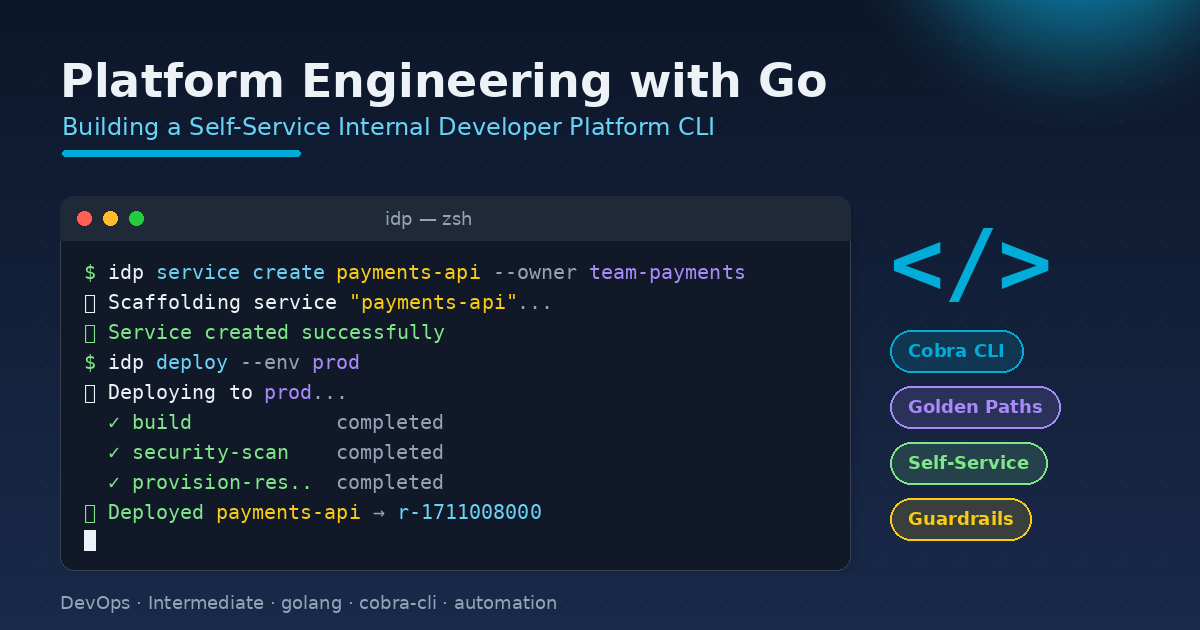
The solution is an Internal Developer Platform (IDP): a curated, self-service layer that abstracts away infrastructure complexity and provides developers with “golden paths” to production. At the heart of many successful IDPs sits a command-line interface (CLI) that developers use daily to scaffold services, provision resources, and deploy applications.

In this guide, you’ll build a production-grade IDP CLI in Go using the Cobra framework. Go is the de facto language for platform tooling—it powers Kubernetes, Docker, Terraform, and countless cloud-native tools—thanks to its single-binary distribution, excellent concurrency, and robust standard library.

GitOps Workflows: Automating Kubernetes Deployments with ArgoCD

GitOps Workflows: Automating Kubernetes Deployments with ArgoCD

Bogdan Ungureanu
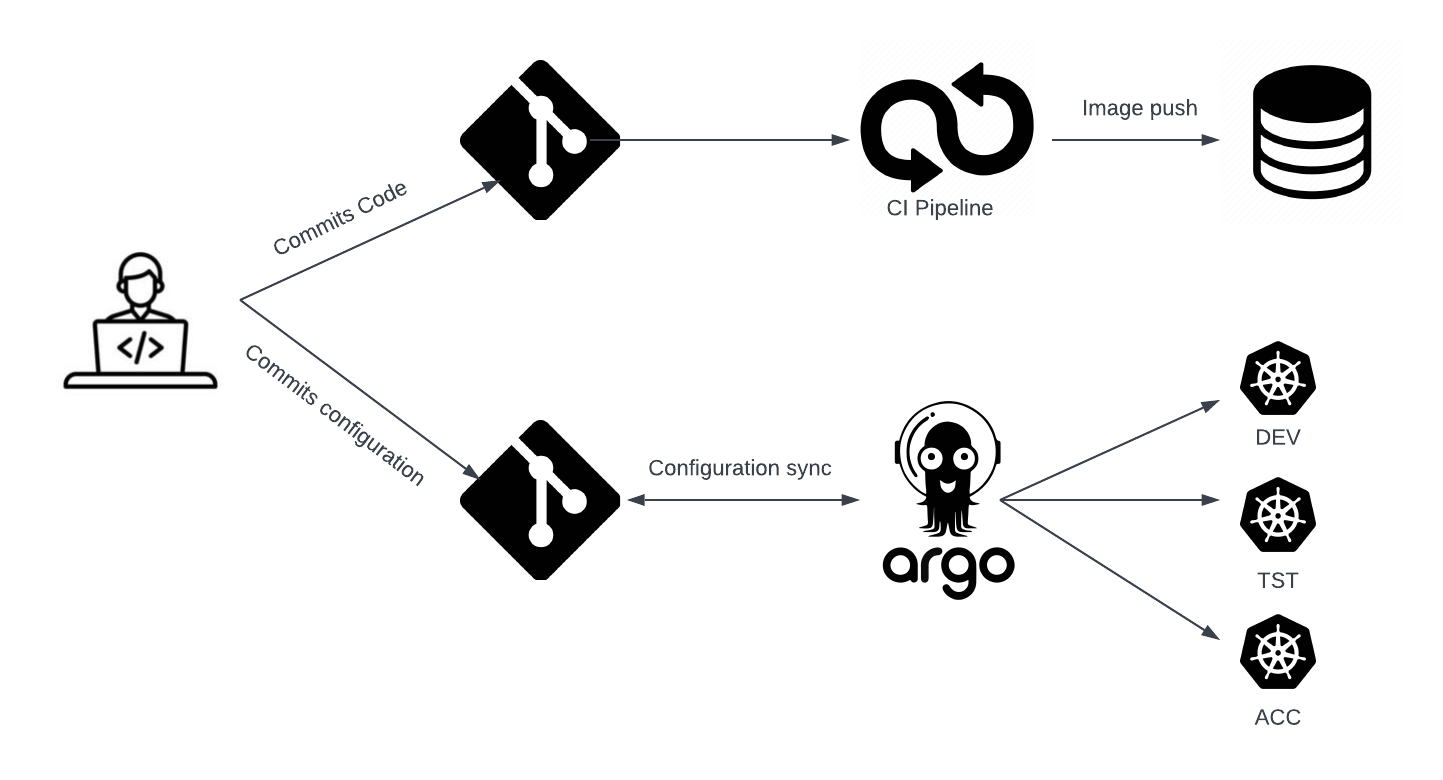
In today’s fast-paced software development landscape, the ability to deploy applications quickly, reliably, and consistently has become a critical competitive advantage. Traditional deployment methods often involve manual processes, imperative commands, and fragmented toolchains that can lead to configuration drift, deployment failures, and security vulnerabilities. This is where GitOps emerges as a transformative approach, treating Git repositories as the single source of truth for both application code and infrastructure configuration. GitOps represents a paradigm shift in how we think about continuous deployment and infrastructure management.